I have been reading (5)

The Happiest Man on Earth
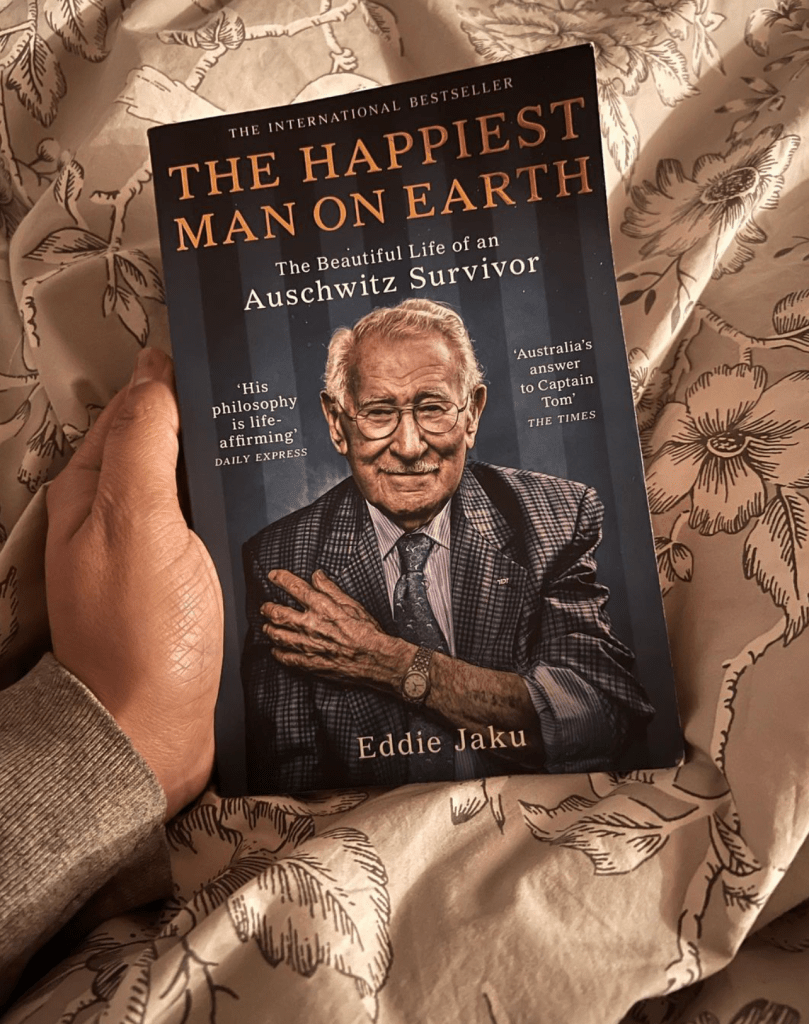
I finished reading this and did this come at an incredibly needed hour. Books do find you because I have had this in my collection for so long now and yet chose this moment to pick this up hoping it would be a balm to my senses that seem to be pulled in very many directions each day, from the joy of the simple and the routine to the sadness of the loss of the simple and routine for many to an absolute disdain for the inhumanly acts only humans are capable of and the anger at having to watch it all. But if you were to watch from the big tree far away, everything seems to move on, as if untouched. 
Eddie’s story is of not just survival but he champions the power that hope brings in the darkest and most dreadful of times. It is a story of how you do everything to squeeze out that last ounce of innate strength and keep going for the light at the end of the darkest tunnel. Eddie highlights the most simple and profound truths and remind us of what truly matters in life. His stories are vivid, uncomplicated and there is a quiet dignity to the book that made me hold onto it. He starts with “my dear friend”, and that is how I left feeling.

Days at the Morisaki Bookshop
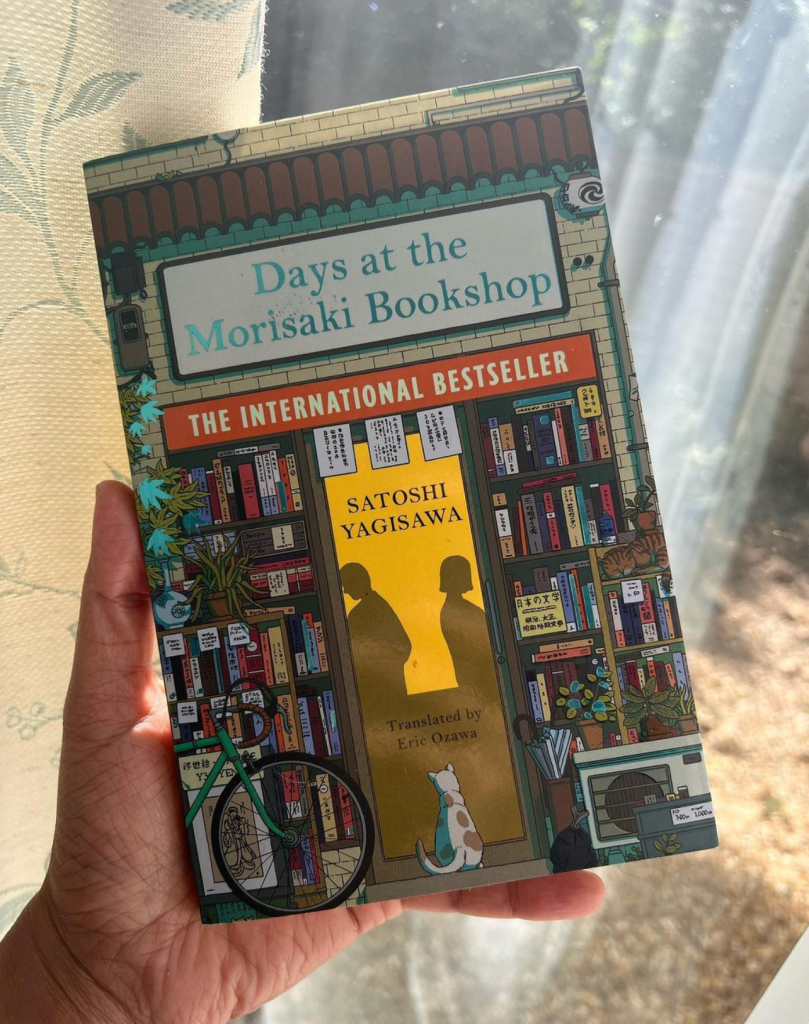
By now, you know my love for Japanese writing and well done translations. I love how familiar, simple, relatable conversations are dealt in simple yet profound ways. The ones I have read are not exactly fast paced, infact, the lives move with slow deliberation and it is exactly that kind of pace that gets me every time.

The Days at the Morisaki Bookshop follows Takako, who quits her day job and her relationship. It is at this point, she receives an invitation from her uncle whom she considers quirky/unrelatable, to move into the apartment on top of his bookshop, which changes the trajectory of her life. Her uncle whose wife leaves him without any explicit reason, lives and manages the bookshop alone. The book has two parts – the first one around Takako finding her next steps and the second one is about the uncle’s wife coming back and reasons behind her departure and return. 

It is as much a book about finding your ground as it is about connecting with and re-learning about people whom you’d already formed an opinion of. 
This book is magical in its own way, different from the kind of magical feeling that “Before the coffee gets cold” evoked in me. This magic is in its comfort, in the characters who feel so endearing and real, in the books, bookshops and coffee that wraps you in a warm embrace letting you cozily engage with a very well written and translated story. I recommend

Siddhartha Street

Here is the thing about rain. It evokes something poignant and nostalgic and wishful all at once if I only sat by the window and watched it hit the ground. Slowly surely and in an oddly comforting way that does not seem extraordinary at first but then I sort of begin to realise how this is exactly the kind of quiet that I have been busy for. 
I am talking of a drizzle that gains and loses momentum as you get lost in a world thousands of miles and sometimes, years away. The extraordinariness of the ordinary and the familiar is something that energises you and reminds you of a self you may sometimes forget in the humdrum of life. 
Like this book and its stories.
Simple, everyday movements that seem slow and set in environments that seem so familiar that I started imagining my street, my neighbours we knew but not necessarily the stories that came with them. The book touches on an event in the lives of different neighbours along Siddhartha Street through slow, everyday actions that are visible to a naked eye and through conversations and emotions that reveal the story behind them all. A lovely read that I finished long back but the rain today reminded me of my street and then this book.
Rain does that to you, takes you to places and people and books in the deepest corners 

Nobody will tell you this but me
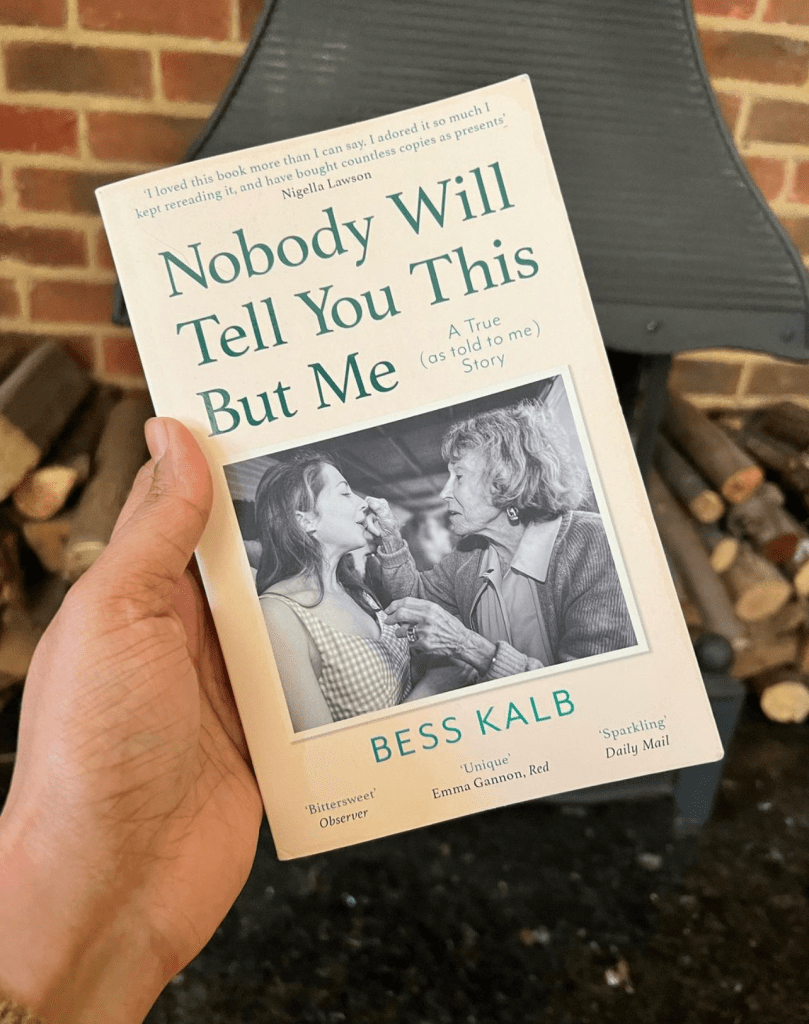
I cannot remember a single day when I haven’t played back something a loved one has told me in the past or imagined what they’d tell me in a situation am in. For no reason at all, sometimes when I sit down with my coffee (okay this one is not exactly as calm every time), I rewind to a conversation with someone who is far away. This experience itself can be sweet, bittersweet, funny, poignant – anything. Imagine writing this all down – all these conversations real and hypothetical (because you can do that when you know someone really well) into a memoir – that is what Bess has done, giving us a glimpse into the life – love, laughter, legacy and all with her grandmother. I absolutely loved the grandmother’s character as Bess outlines it – such a strong personality, opinionated, humorous, knowing exactly what needs knowing. I loved the message she reinforces throughout, “If the earth is cracking behind you, you put one foot in front of the other.”
I love memoirs, stories, the simple stuff. They teach us things that matter, in a manner that stays and a relatedness that makes you pause. This one made me laugh and teary and in an odd way comforted me about how people never pass. They live on within you, in those memories you made with them and through the words and moments you shared with them. And they live on in others too, through the memories you share of them.
I have been reading (4)

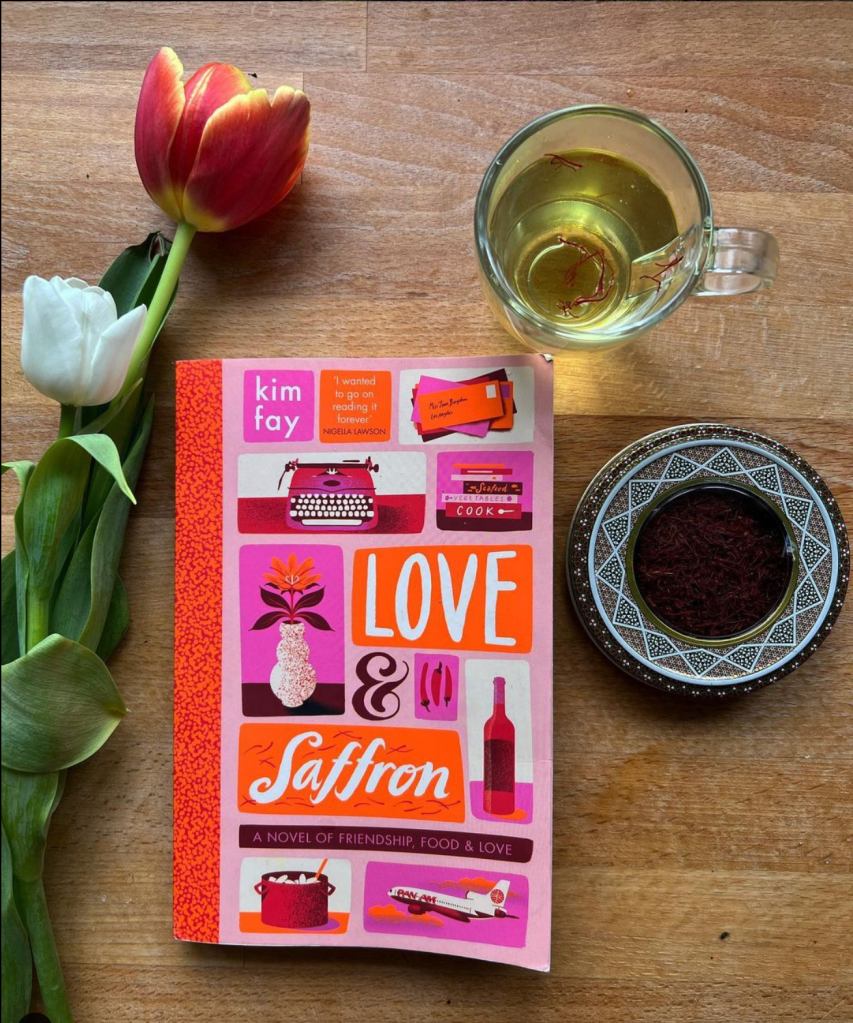
Love and Saffron

I have been really touched by some beautiful books recently. While I have been reading some academic material and re-reading children’s literature, I have missed reading. You know what I mean? 🙂 Somehow the brain compartmentalises reading so it is not enough if you have been reading anything. I have stopped fighting it but I have missed it.

So when I laid my hands on this beautiful epistolary novel, I dived right in. I love letters, reading them, writing them and waiting for them. And every night for the past few nights, I have sparingly read a few letters that transpire between two beautiful women who write to each other of their culinary experiments, of their little escapades, of the people they met and of life itself. I have waited to appreciate the friendship that blossoms through their letters, a bond that had me in tears from being overwhelmed at how beautiful life is and how little is needed to feel that sense of absolute delight. Ironical, isn’t it? 
And I wept at the end at how intertwined lives can get when you devote your everything as you write a letter. Not a phone call, not a message but a letter that requires you to sit still and let your ink flow to your mind and nothing else, as you reflect and confide. 
I remembered my own letters to a friend who was a nurse in the same hospital as my aunt. All our letters were in Kannada and after sending a letter of mine, I’d wait and wait with utter impatience for the postman and I was never disappointed. We wrote until she confided in me of how things were changing for her and that her address and letters are no longer certain. But I am so happy for that phase of my life and wonder why I didn’t do it more. 

Kim Fay @kimkfay has written such a beautiful piece and inspired by real people. As much as I wanted to devour it all in one go, I didn’t. I waited every night for bedtime and read only a few letters and I’d wait for the next. And the whole wait was so tearfully worth it.
And I am sharing this with you as I enjoy some saffron which K very thoughtfully brought back from Dubai. My very own Love and Saffron 🙂

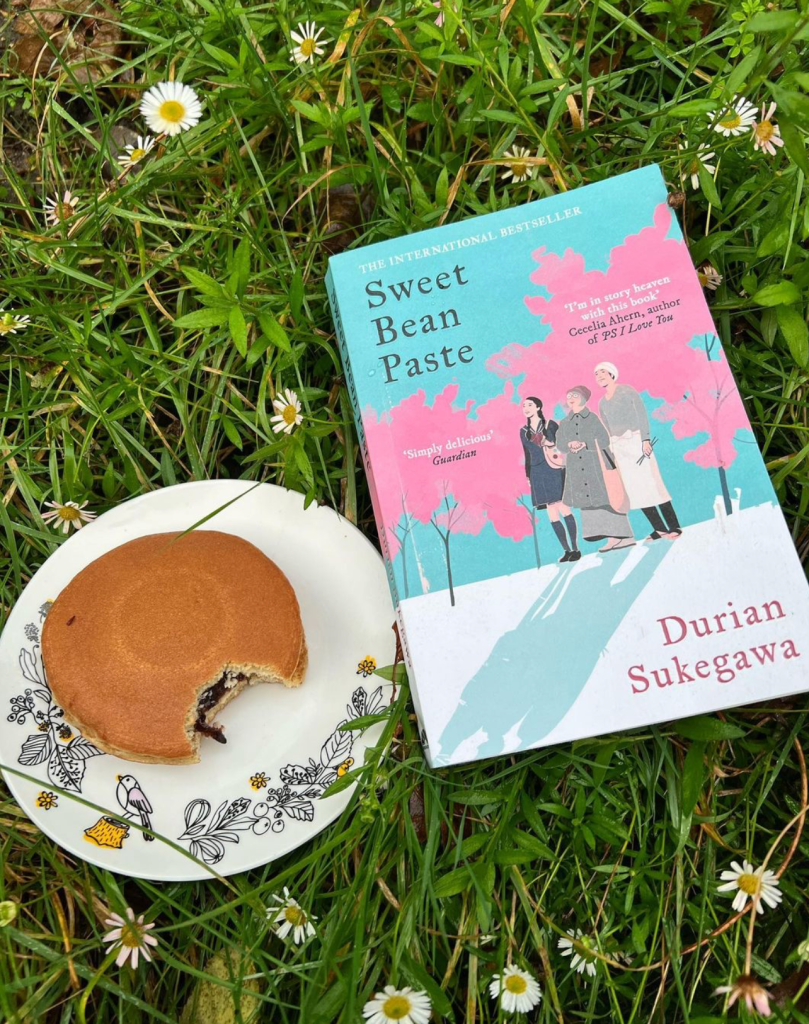
Sweet Bean Paste

I read this book a while ago when A posted about how she couldn’t stop thinking about it. I am so grateful for this recommendation because it is one beautiful book, another evocative Japanese writing that truly touches on a multitude of intense issues with a clarity so simple and eye opening.

In writing about the unlikely bond that develops between a formerly incarcerated confectionary shop worker who makes dorayakis, a 78 year old woman he hires and a troubled teen girl who visits, he brings out the stigmas that prevailed in Japan around health and the kind of impact they had.

The story drives home a beautiful message on acceptance and understanding and therefore inclusion. ‘That’s why I made confectionery. I made sweet things for all those who lived with the sadness of loss. And that’s how I was able to live out my life.’

One of the things I have admired in people who do the same thing for years AND take pride in it, is the devotion. Cooking for example. It takes a lot to be so observant, skillful and driven to keep at it consistently. To know it all, like the back of your hand, to hear the ingredients speak and to watch them change. Meaningful work is not necessarily monetarily profitable work, not always. And to make something with joy and for joy just humbles me. And that belief was rekindled in me.

Why do we live? What purpose does a cruelly short life have? Or one with sickness? Or one that is ostracised? When Tokue answers this in the most profound and simple way, it left me thinking for days on. Each of our existence gives the universe its purpose. Everything else exists because you exist. And you exist to give it meaning.

To celebrate, I finished the last pages of the book with a dorayaki with sweet bean paste that I spent a few hours searching for. I will never forget the way this book made me feel.

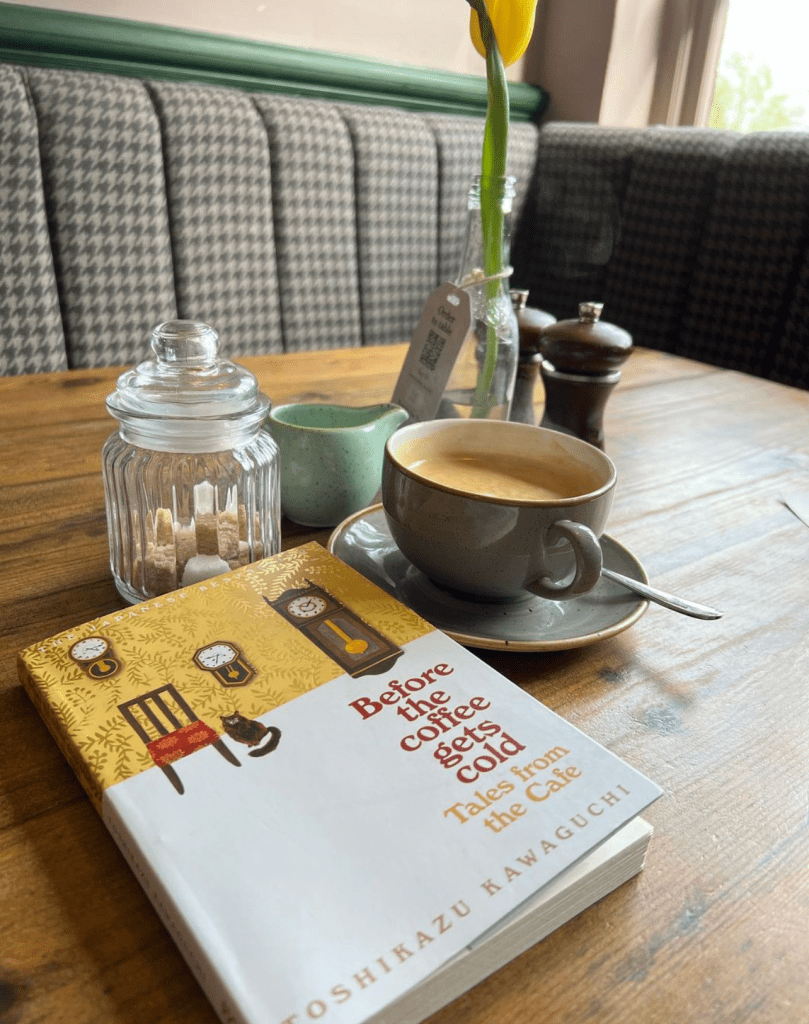
Before the Coffee gets Cold

One Wednesday not long ago, I took an hour off early morning and went for coffee at a restaurant a few hops away. My favourite coop was empty and as I sat down, the staff who was fixing a coffee smiled widely at me, “I’ll be with you in a mo”. I peeled my layers off, took my book out and sat. As promised, she was with me, “would you like some coffee or tea?”
The eeriness of the striking similarity between what I was reading and my context hit me so hard and I must have smiled so amusingly at her as I told her how lovely coffee would be, because she went away without asking me what kind of coffee I wanted. 
The book is set in a cafe that lets you travel back in time with a few conditions, one of the most important ones being the inability to change the present. The rules get clearer as one advances further in the book through different stories. It traces the stories of four different characters as they travel back in time for various reasons despite this knowledge and it struck me that while a lot of us think wistfully of a time bygone, we often want to go back and change our decisions and actions in the hope of bettering the present. But there is much more to it, in these stories. It is about changing or saying something despite the knowledge that the present will remain the same if only because it lends a different meaning to the lives involved. Even if there is nothing that one can do to change the circumstance, there is so much one can do to make people feel better about it, about themselves. And that alone makes the journey worthwhile. 
While the concept seems out of the ordinary, the author approaches some of the most sensitive topics with a clarity so simple that is so characteristic of some of the Japanese fiction I have read.

As I write this, I cannot help longing for this very morning when the restaurant staff served me the most amazing filter coffee with some milk on the side as if she knew that it was what I wanted. I’d go back to this very morning and change nothing at all ❤️

I have been reading..

Quite bluntly, I am no great reviewer of books (you will soon see that for yourself anyway). I think it is because I lack the patience to write a review before jumping onto another book wagon. But I do like a bit of reflection. And ever since Instagram has happened, I have been rather inconsistently microblogging (is that the word now?) and that quite worked out conveniently given how short my thoughts are, atleast when writing them out anyway. But I do want to document most of that here on the blog every now and then when I have a few books to talk about.

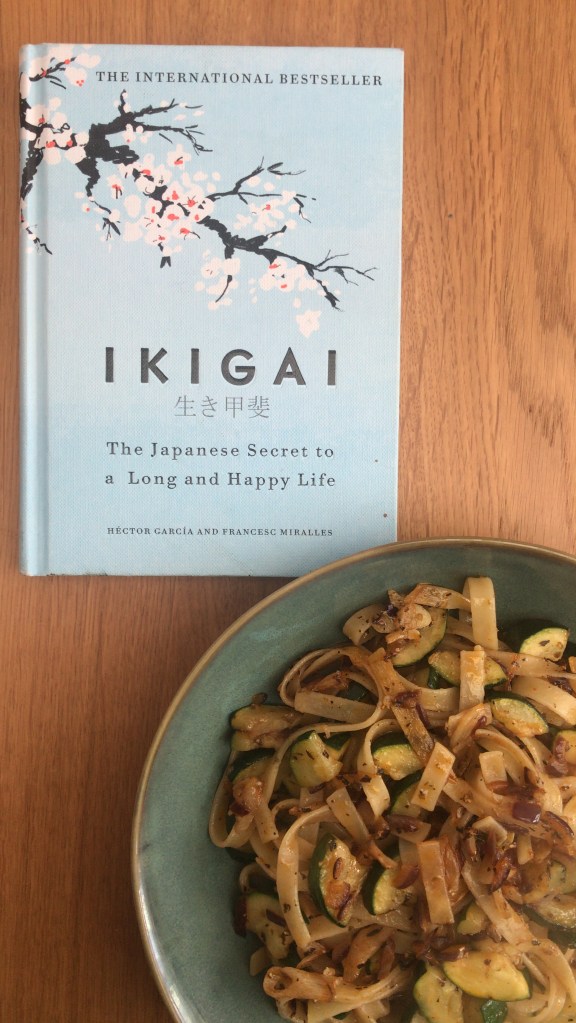
Ikigai – what a beautiful word, “a reason for being”, a purpose for living. I picked this book up at Blore airport. Having spent a few weeks with family after more than a year, I was ecstatic. I felt extremely energized and I picked this one up and read it in that enthusiasm. Naturally, I waited for a while to write this. Having read it in a happy frame of mind, I liked parts of it because they felt like summaries of concepts that map to a good healthy life – diet, exercise, community…. There is definitely bits to take away, ponder over AND most importantly, read more about. But to be objective, this book was a fair bit of a jumble drawing from schools of psychology to interviews with octogenarians in Okinawa to benefits of green tea? I felt there was so much to dig into and draw connections probably but it felt like a potpourri of good advice (a summary of concepts from Japanese culture) but never doing justice to something as deep as Ikigai. Most of it is through the authors’ lens as they experience the Japanese culture which makes it a a fair bit of “here are the takeaways”. Agreed, Ikigai itself is a topic so personal but the book left me wanting for a far richer narrative, more life stories (the interviews form such a small part of the book) and threads that connect our stories. I don’t know what that would exactly look like, but I wish this book had it.

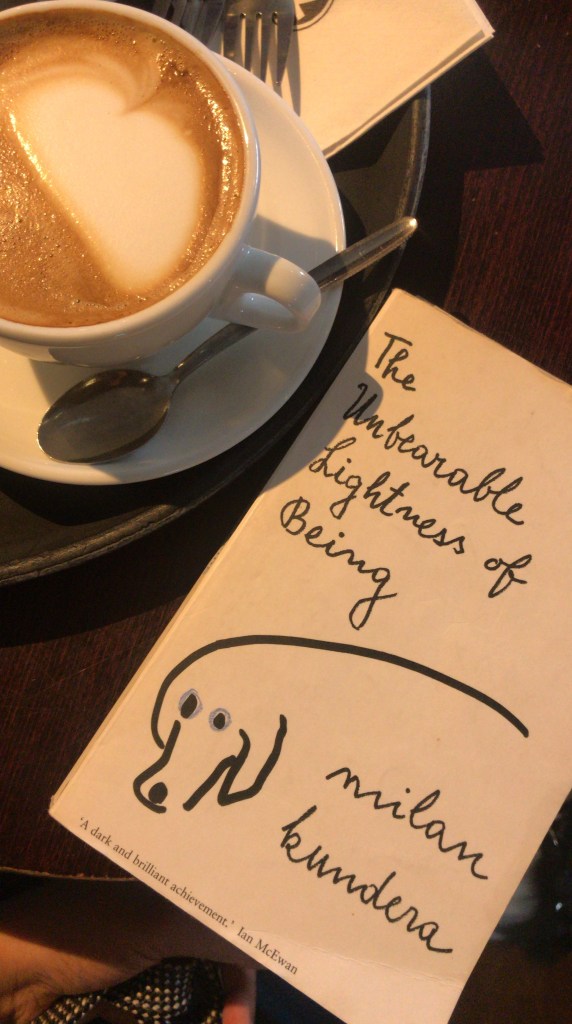
I will admit that I sometimes start some books with a lot of hesitation. I do not enjoy pseudo-intellectual thinking and meandering for the sake of it that sometimes runs into pages and pages. And so, inspite of hearing amazing things about Kundera’s books, I started this with low expectations. It always helps to start something that way, doesn’t it? 
Kundera definitely goes deep into aspects of his characters. There are only 4 of them, none of them who seemed remarkable to me at first. But that is the joy of reading because you let the author and her/his words really tell you about them and get you inside their heads. I will give it to Kundera for his craftsmanship in the way he has presented little insights, hard-hitting, soul-crushing and poignant in parts. There are no endless paragraphs but when you reflect on the small chapters and some of those insights, the book feels impressive. One of the biggest dilemnas that the characters face is the one that haunts each of us at different points in our lives – the “what if” and maybe even the pursuit of perfection. But it is hard because, in Kundera’s words, “We can never know what we want, because, living only one life, we can neither compare it with our previous lives nor perfect it in our lives to come.” It is the irony of having a single life. For this very reason, one’s choices do not have a lot of weight in the grand scheme of things. The unbearable lightness of being. Somewhere along, different events occur that touch you and impact you in different ways and “relieve” you from this lightness. 
There are definitely parts in the book that I could not understand. I do not want to call it pretentious because after all I have only read this once so maybe a re-read would help, but I am not so strongly inclined to go back and read it again for the time being. The book definitely made me think, not in a life changing way but in a way that helps me appreciate the simplicity, complexity and beauty of abstraction and life.

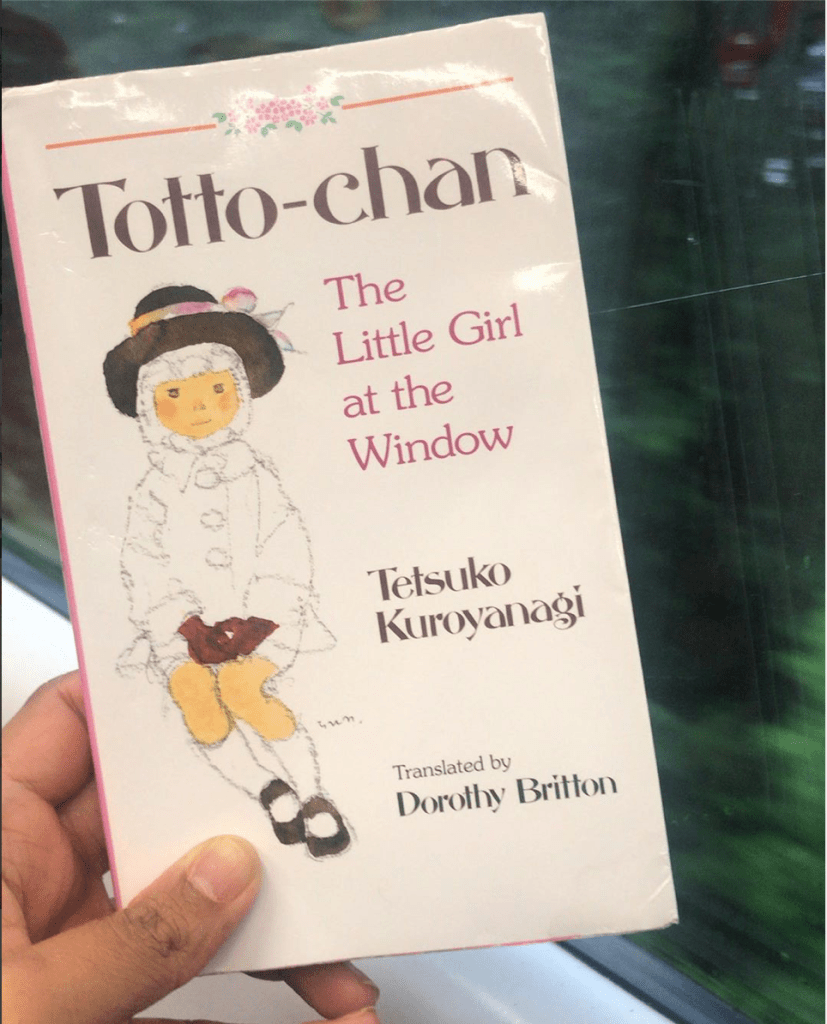
I read this a while ago and I just cannot NOT share this here – please read this autobiographical memoir. I have tried to blink away my tears of joy and sadness and pride as I read this on my commute almost angry at myself for withholding from expressing what I felt so strongly about. It is incredibly hard for me to come close to describing the unparalleled joy that Kobayashi’s school Tomoe, a school set in railway carriages and nothing less, gives me. Totto-Chan (author Tetsuko Kuroyanagi herself) recounts the several little ways her Headmaster Kobayashi devised to make children feel special led by his strong belief in the innate goodness of children and his attention to them. The way the classes were organised, the farmer teacher, the sports day with specially created games resonated so deeply with me and while I am not ready or patient enough to speak of why this book is probably going to be one I will read and re-read for a long time to come, I promise to, someday. That a school like Tomoe with all its little stories of love, compassion, loss and rebirth, existed in Japan while the world was at war, with children blissfully unaware of the ongoings is heartbreaking and beautiful. The post-script is equally a joy to read and the students continue to have reunions every year on November 3, their Sports Day. Having worked in education, I know it is not easy to create a class or school, even the one that you strongly believe in. But Kobayashi was one of them who did. And to have it all taken away on a morning during the war angered and deeply saddened me. Wars have never done anyone or anything good. But I am happy Tomoe existed for those 7 years from 1937 – 1945 and that Tomoe’s story will live on in the hearts of the readers and inspire many even if only by mocking some of the systems we have. And this time, it was me by the window in a train reading about a little girl and her school set in railway carriages not so long ago. It really was a damn good school, you know.

I have a few more books to talk about but I think I will stop here for now and get to my little Prince 🙂